


CM Culture Displays
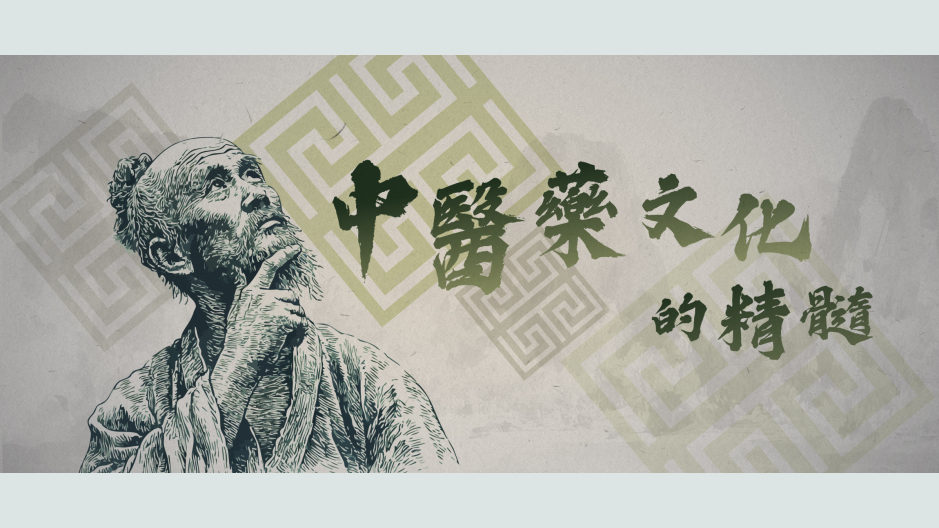
The Essence of Traditional Chinese Medicine Culture
The formation and development of traditional Chinese medicine (TCM) culture have been profoundly influenced by ancient Chinese philosophical thought. Guided by ancient materialist philosophy and dialectical thinking, the ancients adopted a holistic concept (also zheng ti guan nian, or holistic view) to observe and understand nature, life and disease as an integrated whole. Through long-term and repeated clinical practice, they gradually established a systematic and comprehensive theoretical framework.
Man-Nature Unity
Tian ren he yi (man-nature unity) is a fundamental worldview in ancient Chinese philosophy. It holds that all things in the universe form an integral whole, and that human beings, situated within nature, are governed by the laws of heaven and earth. Human life activities correspond to changes in the natural environment; seasonal transformations and climatic variations directly influence the internal milieu of the body. Accordingly, TCM emphasises regulating the body in accordance with seasonal qi, maintaining harmony between the human body and nature.
Yin-Yang Theory
Yin-yang theory constitutes the core of TCM theory. Yin and yang represent two opposite yet interdependent aspects of all phenomena. They are mutually restraining and mutually supporting; neither can exist in isolation. Classical analogies include heaven and earth, movement and stillness, warmth and cold. Yin and yang are in constant motion, waxing and waning in dynamic equilibrium. When yin and yang are harmonised, physiological functions remain normal; when this balance is disrupted, disease may arise. Thus, both in the human body and in nature, health depends upon achieving a state in which yin contains yang and yang contains yin, maintaining dynamic balance.
Meridians and Collaterals Theory
Jing luo (meridians and collaterals) consist of jing mai (meridians) and luo mai (collaterals), forming a complex network throughout the body. They serve as pathways for the circulation of qi and blood, linking the five zang organs and six fu organs, connecting skin, body hair, sinews and bones, and communicating between interior and exterior as well as upper and lower regions. Only when the meridians and collaterals are unobstructed can the zang-fu (viscera and bowels) be nourished and normal physiological activity maintained. TCM holds that, by stimulating specific acupoints through therapies such as acupuncture and moxibustion, tuina and qigong, it is possible to unblock the meridians and collaterals, promote the circulation of qi and blood, regulate the functions of the zang-fu (viscera and bowels), and rectify imbalances between yin and yang.
Essence-Qi-Spirit Theory
Jing (essence), qi and shen (spirit) are regarded as the three fundamental substances constituting human life. Essence refers to the essential substances that form and sustain the body. It includes congenital essence inherited from one’s parents and acquired essence derived from food and drink after birth. Qi is the vital substance that activates and regulates physiological functions. Spirit encompasses mental activities, consciousness and emotional expression. Essence, qi and spirit are interdependent and mutually supportive. When essence is abundant, qi is sufficient and spirit is flourishing, health is maintained. Conversely, depletion or disharmony among them may result in disease.
Medicinal Substances and Formulas
Chinese materia medica constitutes an indispensable therapeutic tool in TCM. Physicians utilise yao wu pian xing (medicinical peculiarity) to rectify yin-yang imbalance in the body and restore dynamic equilibrium. Medicinal substances are characterised according to four qi (warmth, hot, cold, and coolness) and five flavours (sour, bitter, sweet, pungent, and salty), as well as by their ascending, descending, floating and sinking tendencies. By applying the properties and flavours of medicinals, warm or hot medicinals treat cold patterns, cold medicinals treat heat patterns, sweet medicinals supplement deficiency, and salty soften hardness and dissipate masses. In addition, the ascending, descending, floating and sinking characteristics are employed to address disorders at different disease locations. Different medicinals are combined into fang ji (formulas), structured according to the hierarchy of jun-chen-zuo-shi (monarch, minister, assistant and guide). They are matched with one another, each performing its own function. While expelling pathogenic factors, attention is paid to protecting healthy qi. This is the subtlety of Chinese materia medica.
The above translation was supervised by Prof. Janice PAN. The content was translated by Mr. Adrian MOK, and edited by Prof. Janice PAN and Dr. Robert TSATURYAN, with Mr. Sing Leung CHAN, Chinese Medicine Practitioner, serving as consultant.
