


CM Culture Displays
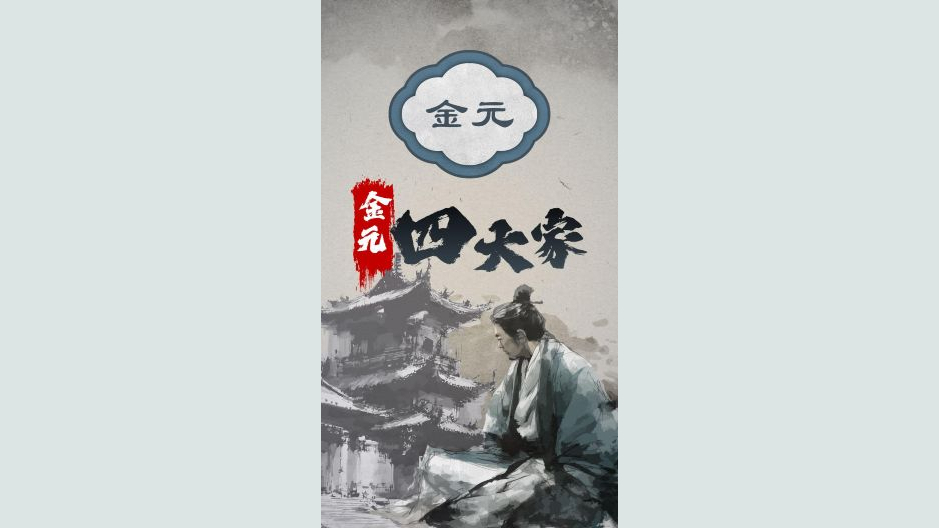
The Four Great Masters of the Jin-Yuan Period
During the Jin-Yuan Period, the Four Great Masters, Liu Wansu, Zhang Congzheng, Li Gao, and Zhu Zhenheng, built upon the classical foundations of Huangdi Neijing (Yellow Emperor’s Inner Canon) and Shang Han Lun (Treatise on Cold Damage). In response to the social environment of their time, the constitutional conditions of patients, and their own innovative interpretations of medical theory, they broke new ground in establishing distinct scholarly traditions. Their remarkable medical achievements constitute a brilliant chapter in the history of traditional Chinese medicine (TCM). Each made significant contributions to the inheritance and innovation of TCM, leaving distinctive and enduring medical insights.
In the Song Dynasty, the government established the Taiping Huimin Heji Ju (Bureau for the Benefit of the People with Harmonised Prescriptions) and standardised officially approved clinical prescriptions known as jufang (bureau formularies). At that time, the public often requested ready-made prescriptions based solely on disease names, without differentiating between cold and heat patterns. Consequently, warming and drying medicinals were widely and inappropriately used, contributing to the prevalence of warm-heat constitutions.
Liu Wansu placed particular emphasis on the pathogenesis of huo-re (fire heat). He proposed that the liu qi (six climatic factors), namely wind, dampness, dryness, cold, fire, and heat, could transform into heat and generate fire, and vice versa. He further observed that excessive emotional states of joy, anger, overthinking, grief and fear could likewise give rise to fire-heat pathomechanisms.
His major work, Suwen Xuanji Yuan Bing Shi (Analysis of the Profound Mechanisms of Plain Questions and the Origin of Diseases), is a commentary and elaboration on Huangdi Neijing Suwen (Plain Questions of the Yellow Emperor’s Inner Canon). Centred on the theory of wu yun liu qi (Five Movements and Six Qi), the text explores how climatic changes in nature influence human health and disease. The formula Fangfeng Tongsheng San (Saposhnikoviae Powder to Permeate the Sagely), recorded in Huangdi Suwen Xuanming Lun Fang (The Prescriptions and Expositions of Yellow Emperor's Plain Questions), applies the three therapeutic methods of dispersing, clearing, and unblocking to treat conditions such as limb and joint pain, urticaria, and sores. Later physicians interpreted its functions as releasing the exterior and unblocking the interior, dispelling wind, and clearing heat.
Li Gao lived during a period marked by warfare and social instability. Poor diet, excessive labour, and emotional strain frequently damaged the spleen and stomach, resulting in neishang bing (internal injury disorders). Such patients often presented with fever, which could easily be misdiagnosed as an external contraction disorder, leading to inappropriate treatment. Li Gao advanced the view that “Human life is rooted in stomach qi; pathological fire and original qi cannot coexist”. He emphasised that weakness of the spleen and stomach is a fundamental cause of the upward flare of yin huo (yin fire). In Pi Wei Lun (Treatise on the Spleen and Stomach), he systematically expounded the aetiology, pathomechanism, pattern identification, and treatment principles of internal injury disorders, exerting profound influence on later generations. His representative formula, Buzhong Yiqi Tang (Decoction to Tonify the Centre and Augment Qi), exemplifies the method of gan-wen-chu-re (treating fever with sweet and warm medicinals). Chief ingredients such as Huangqi (Astragalus Root, Radix Astragali) and Renshen (Ginseng Root, Radix Ginseng) tonify qi while raising the clear yang, and are particularly effective in treating qi deficiency fever. Later physicians extended this approach to treat spleen qi sinking patterns, such as prolapsed uterus and stomach ptosis.
During Zhang Congzheng’s era, many physicians indiscriminately prescribed tonifying medicinals without distinguishing deficiency from excess, resulting in the prevalent retention of pathogenic factors within the body. In response, Zhang developed a theoretical system centred on gong-xie (attacking and expelling pathogenic factors). He inherited and expanded the three methods of han (inducing sweating), xia (purging), and tu (inducing vomiting), stating: “Now I discuss the three methods of vomiting, sweating, and purging to expel the pathogen; when the pathogen is removed, the Yuan-primordial qi will naturally recover.” His principal work, Rumen Shiqin (Confucian Duties to Parents), was compiled after he resigned from official service, together with his students Ma Zhiji and Chang Zhongming. Zhang was particularly adept in the use of purgative formulas. Tiaowei Chengqi Tang (Decoction to Regulate the Stomach and Order the Qi), originating from Shang Han Lun (Treatise on Cold Damage), contains only three medicinals — Dahuang (Rhubarb Root and Rhizome, Radix et Rhizoma Rhei), Mangxiao (Mirabilite, Natrii Sulfas), and Zhigancao (Honey‑Fried Liquorice Root, Radix Glycyrrhizae Praeparata — yet possesses powerful heat-draining effects. Zhang regarded it as a superior medicament for draining heat. In Rumen Shiqin, he recorded its application in treating cracked hands and feet, summerheat stroke, lumbar and hip pain, mania, and postpartum wind disorders. Its wide range of indications demonstrates the TCM principle that when the pathomechanism is identical, the same therapeutic method may be applied to different diseases.
In Zhu Zhenheng’s time, the widespread use of jufang (bureau formularies) led many physicians to rely excessively on pungent, hot, and drying medicinals, resulting in frequent manifestations of yin deficiency patterns. In response, Zhu proposed the principle that “yang is often in excess, while yin is often insufficient”. He advocated nourishing yin and reducing fire to restore dynamic balance. His representative work, Ge Zhi Yu Lun (Treatise on Inquiring the Properties of Things), elaborated this theory systematically and provided abundant guidance for pattern identification and treatment strategies. His formula Dabu Yin Wan (Major Yin-Tonifying Bolus) combines medicinals that nourish yin and clear heat, and is primarily used to treat patterns of yin deficiency with hyperactive fire, including tinnitus and deafness. This formula fully reflects his academic emphasis on nourishing yin to control fire, and his doctrines exerted long-lasting influence on clinical practice and theoretical development from the Ming and Qing Dynasties onwards.
The teachings of the Four Great Masters of the Jin-Yuan period not only enriched the theoretical framework of TCM but also provided invaluable clinical experience and intellectual inspiration. Their doctrines continue to be widely studied and applied today, promoting both the inheritance and innovation of TCM. Although deeply grounded in classical texts, they did not adhere rigidly to ancient formulas. Living in an era of excessive standardisation, where one disease corresponded to one fixed prescription, they developed individualised treatment systems tailored to the patient’s specific pattern. Such an approach remains worthy of emulation by later generations.
The above translation was supervised by Prof. Janice PAN. The content was translated by Mr. Eden LAW, and edited by Prof. Janice PAN and Dr. Robert TSATURYAN, with Mr. Sing Leung CHAN, Chinese Medicine Practitioner, serving as consultant.
