


CM Culture Displays
The Body as a Whole
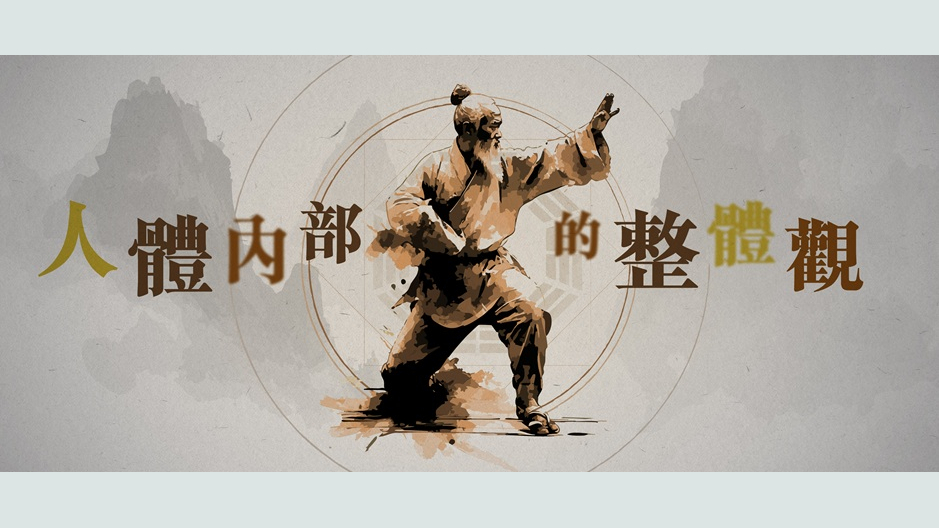
Traditional Chinese medicine (TCM) regards the human body as an organic whole. The five zang (five viscera), six fu (six bowels), skin and hair, tendons and bones, qi, blood and body fluids are mutually connected and together maintain internal balance. Any local abnormality may reflect the overall state of the body. Therefore, the physician infers internal conditions through observing the patient’s outward features (inspection), listening to the voice and speech, examining the odors (auscultation and olfaction), inquiring about the illness (inquiry), and palpating the pulse (palpation). From changes in facial complexion, tongue presentation, patterns of perspiration, the temperature of the limbs, skin elasticity and other manifestations, the functional state of qi, blood, body fluids and the various zang-fu (viscera and bowels) can be deduced.
Accordingly, in treatment, the physician considers the relationships among the zang-fu organs and approaches the condition from multiple aspects. For example, as “the liver opens into the eyes”, visual disorders such as blurred vision or tearing upon exposure to wind may be treated by regulating the liver. As “the kidney governs qi reception”, in cases of chronic cough and deficiency-type dyspnoea, treatment may not focus solely on the lung; insufficiency of kidney qi may also impair respiratory function, and supplementation of kidney qi should therefore be considered. Likewise, chronic diarrhoea and abdominal distension are not necessarily attributable only to disorders of the spleen and stomach. Emotional factors may lead to liver qi stagnation; since “the liver overacts on the spleen” (wood overacting on earth), this may also affect spleen and stomach function.
TCM understands physiological and pathological changes through the principle that “what exists internally must manifest externally”. This also reflects the diagnostic characteristic of “perceiving the whole from subtle signs”, which is fundamental to TCM diagnostics.
The above translation was supervised by Prof. Janice PAN. The content was translated by Ms. May NG, and edited by Prof. Janice PAN and Dr. Robert TSATURYAN, with Mr. Sing Leung CHAN, Chinese Medicine Practitioner, serving as consultant.
