


CM Culture Displays
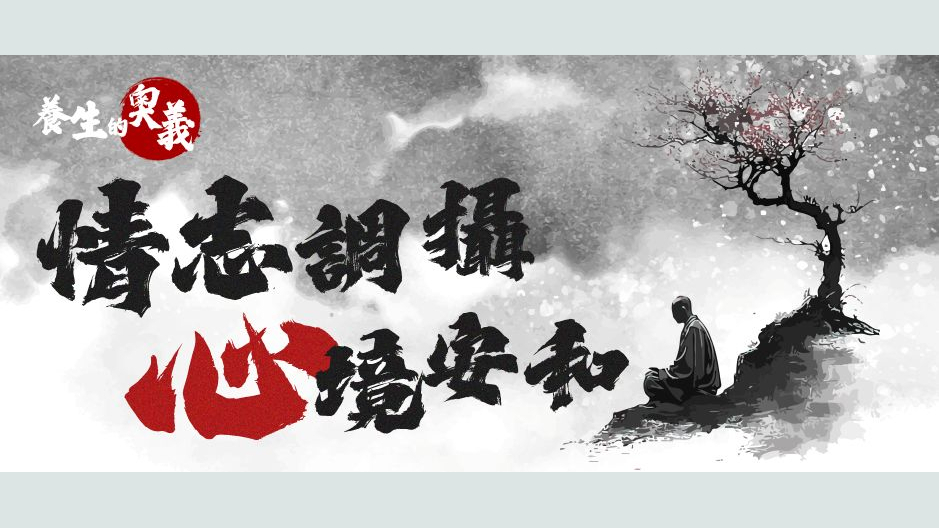
The Essential Principles of Health Preservation: Regulating the Emotions and Harmonising the Mind
The seven emotions include joy, anger, anxiety, overthinking, grief, fear and fright. They are the psychological responses of the human body to external stimuli. As Huangdi Neijing (Yellow Emperor’s Inner Canon) teaches, the five zang (viscera) are the repositories of shen (spirit) and constitute the foundation of emotional activity. When the qi and blood of the five zang are abundant and their functions are harmoniously coordinated, the emotions remain in balance. The heart governs joy, the liver governs anger, the spleen governs anxiety and overthinking, the lung governs grief, and the kidney governs fear and fright.
Under normal circumstances, changes in the emotions do not cause disease. However, when emotions become excessively intense or persist over a prolonged period, exceeding the body’s capacity for adjustment, they may disrupt the balance of qi and blood of the zang-fu (viscera and bowels), thereby giving rise to illness. For example, excessive anger injures the liver, excessive overthinking impairs the spleen, excessive fear damages the kidney, and excessive grief harms the lung.
As stated in Suwen (Plain Questions), chapter Shanggu Tianzhen Lun (Discourse on True Qi in Ancient Times): “When one is tranquil and free from excessive desires, genuine qi follows; when essence and shen (spirit) are guarded internally, how can disease arise?” This passage underscores that when the mind is calm and desires are moderated, genuine qi can be secured and the shen remain internally settled. The terms “tian dan (tranquillity)” and “qing jing (quietude)” do not imply the absence of thought; rather, they refer to preventing excessive rumination and emotional agitation, so that mental activity remains measured and the emotions are appropriately regulated. Such moderation preserves the harmonious movement of qi and the nourishment of blood, thereby supporting health preservation.
The above translation was supervised by Prof. Janice PAN. The content was translated by Mr. Adrian MOK, and edited by Prof. Janice PAN and Dr. Robert TSATURYAN, with Mr. Sing Leung CHAN, Chinese Medicine Practitioner, serving as consultant.
