


CM Culture Displays
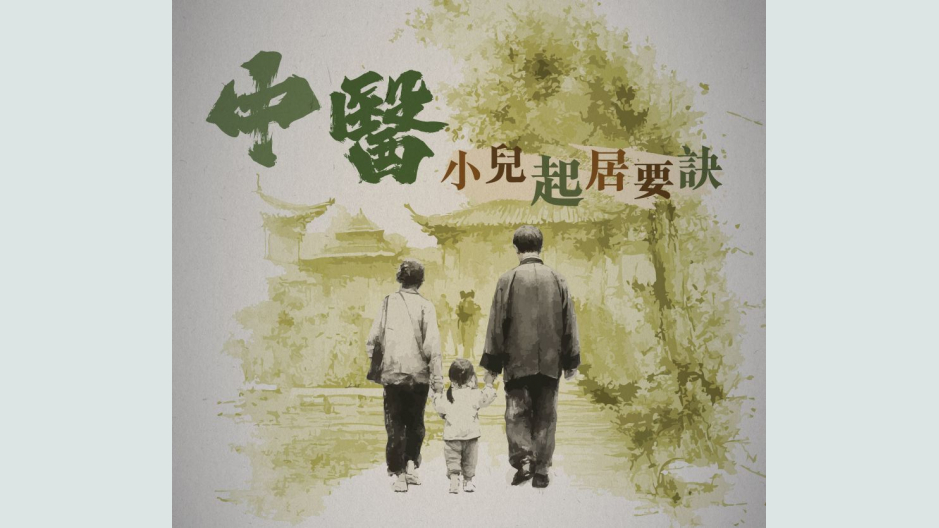
Paediatric Health Regimen in Chinese Medicine
Traditional Chinese medicine (TCM) emphasises “zhi wei bing (preventing a disease before it arises)”, advocating early prevention through regulating one’s daily routine, diet, and other aspects of lifestyle and daily care to achieve bodily balance, enhance a child’s constitution, and reduce the chance of disease. The following are some practical tips for paediatric health preservation:
Dietary Balance
Establishing regular eating habits, avoiding excessive hunger or overeating, and preventing undue burden on the spleen and stomach are fundamental. As the classic text states: “The five grains provide nourishment, the five fruits give support, the five livestock offer benefit, and the five vegetables fulfil the diet.” Eating a variety of foods of different types and colours helps nourish the body as a whole. The regulation of body fluids also requires balance; one should replenish water appropriately. In humid weather, when perspiration decreases, one should avoid excessive water intake over a short period to prevent the accumulation of dampness.
Balance of Activity and Rest
Modern children lead busy lives. Parents should avoid excessively depriving children of sleep. On the other hand, children should not remain indoors for prolonged periods without physical activity. They should be encouraged to go outdoors, stretch their muscles and bones, and engage in Chinese daoyin (guiding and stretching) exercises such as Wuqinxi (Five-Animal Frolics) and Baduanjin (Eight-Brocade Exercises), which are both enjoyable and easy to learn, and beneficial for health.
Balance of Cold and Heat
In the Southern Song Dynasty, the renowned paediatrician Chen Wenzhong wrote in Xiao'er Bingyuan Fanglun (Treatise on the Sources and Formulas for Paediatric Diseases), under the “Ten Methods for Raising Children”, the first five principles: “first, keep the back warm; second, keep the belly warm; third, keep the feet warm; fourth, keep the head cool; fifth, keep the chest cool”. This reflects the approach of balancing the cold and heat characteristics of different parts of a child’s body. Daily life should also be adjusted according to seasonal changes: in spring, focus on soothing the liver and regulating qi; in summer, prioritise clearing heat and relieving summer heat; in autumn, moisten dryness and nourish the lungs; in winter, fortify the kidneys and protect yang. One must also be mindful of the effects of climatic changes and the temperature and humidity of one’s surroundings, for no single approach suits all circumstances. Each solar term has its corresponding health preservation principles — following the natural order is conducive to good health.
Emotional Balance
Children should avoid prolonged stress and suppression; they need timely opportunities for relaxation and expression. At the same time, they should avoid excessive or prolonged stimulation and excitement, with timely composure when needed.
When applying TCM health preservation methods, the most important principle is to respect individual differences. Under adequate guidance, parents should choose methods best suited to their child, monitor whether health improvements are achieved, and make timely adjustments.
The following are pearls of wisdom from ancient texts on the care and nourishment of children’s spleen and stomach:
“In treating disease, never forget the spleen and stomach.” — Youke Chuyan (Humble Words on Paediatrics)
“Eat warm, eat soft, eat less, and one will not fall ill; eat cold, eat hard, eat too much, and illness will abound.” — Xiao’er Bingyuan Fanglun (Treatise on the Sources and Formulas for Paediatric Diseases)
“Endure a touch of cold, eat only seventy percent full, and frequently massage the belly.” — Xiao’er Bingyuan Fanglun (Treatise on the Sources and Formulas for Paediatric Diseases)
“Ten Methods for Raising Children: … the seventh is to keep the spleen and stomach warm …” — Xiao’er Bingyuan Fanglun (Treatise on the Sources and Formulas for Paediatric Diseases)
The above translation was supervised by Prof. Janice PAN. The content was translated by Ms. Emily SIU, and edited by Prof. Janice PAN and Dr. Robert TSATURYAN, with Mr. Sing Leung CHAN, Chinese Medicine Practitioner, serving as consultant.
