


CM Culture Displays
Yin and Yang in Equilibrium: Bringing One’s Spirit and Mind in Order
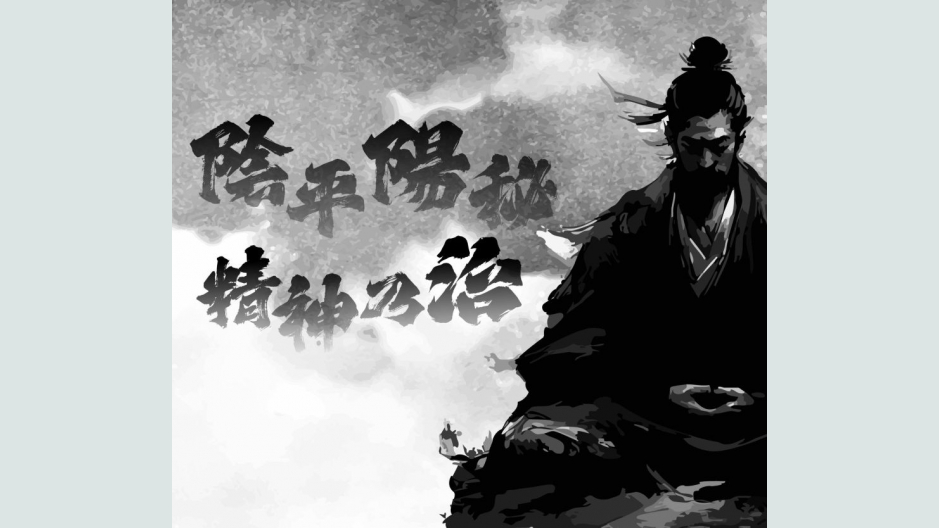
The saying “yin ping yang mi, jingshen nai zhi, yin yang li jue, jingsheng nai jue (when yin is balanced and yang is secured, the spirit and mind are in order; when yin and yang are severed, the essence and qi are exhausted)” originates from Huangdi Neijing (Yellow Emperor’s Inner Canon), specifically in Suwen (Plain Questions), chapter Shengqi Tongtian Lun (Treatise on the Origin of Life and the Natural Order). It is one of the most important concepts in traditional Chinese medicine (TCM) theory, emphasising the significance of yin-yang balance for bodily health, and the consequences of yin-yang disharmony in giving rise to disease.
In the phrase “yin ping yang mi”, “yin ping” refers to yin qi being balanced and harmonious, and “yang mi” refers to yang qi being firm and secured. TCM holds that only when the yin and yang qi within the body are in mutual equilibrium can the body maintain its normal functioning. If yin qi is deficient and yang qi is excessive, various health problems will arise, and vice versa. Therefore, “yin ping yang mi (balance between yin and yang)” is one of the most essential principles in TCM health preservation.
In the phrase “jingshen nai zhi”, “jingshen (spirit and mind)” refers to a person’s mental and physical state, and “zhi (in order)” refers to a state of normalcy and stability. If the balance of yin and yang is maintained, the body’s mental and physical state will remain normal and stable, and one will feel comfortable and content. Conversely, if yin-yang balance is disrupted, various symptoms of mental and physical discomfort may arise, potentially triggering various diseases.
The above translation was supervised by Prof. Janice PAN. The content was translated by Ms. Janet YU, and edited by Prof. Janice PAN and Dr. Robert TSATURYAN, with Mr. Sing Leung CHAN, Chinese Medicine Practitioner, serving as consultant.
